
7. CHURCH & STATE
The practice of ancient religion, for the average person, was about fending off disease, helping crops to grow, insuring safe travel. Much of the ancient religion the Israelites and then the first Christians encountered was really magic and fortune-telling.
Religion was largely about money: the banks in ancient cities were the temples. Religion was highly s-xualized - and Dionysus, the god of wine, functioned as a divine sponsor of drinking and revelry. Any of these (prayers for health, safety, pondering the future, money, s-x and alcohol) sound familiar today?
Ancient religion was not about conversion, or salvation. The goal was not character change, or improvement; the Jews were the first and only religion (until Christianity) focused on morals.
What did ancient religions have in common? They were about buttressing the government, keeping citizens in line, establishing a divine aura around the power and politics of the emperor. To worship Marduk was to be subservient in the realm of King Hammurabi; to sacrifice to Osiris was to declare allegiance to the Pharaoh.
The Pharaohs came to vaunt themselves not as lieutenants of the gods, but actually as divine themselves! Daniel and his 3 friends refused to bow down to worship the golden image of King Nebuchadnezzar - and were thrown into the fiery furnace for their civil disobedience, for their lack of patriotism.
By New Testament times, the real competitor Christianity faced was the religion of the empire, the cult of the state. Caesar declared himself a god; citizens were expected to engage in city-wide worship services lauding Caesar. This the Christians would not do - and it cost them respect, business, and their very lives. When the Bible says "Christ is Lord," we need to hear how subversive and unpatriotic that was - for this implies "...and Caesar isn't!"
What's special about Christianity? From the beginning there has been a dogged refusal to cozy up to any government. It's in our DNA to be a bit revolutionary, to keep our distance and not bless any earthly power - for we know the fallen, broken nature of all humanity, and the perils of power that can only be wielded wisely by the one true God.
Americans seem to cherish the "separation" of church and state - and yet we see religious folk blessing governmental policies that are alien to what God is about; we see politicians pandering to evangelicals to win votes, and this nonsense that the church's job is to support our government. The Israelites, and then the Christians were wary, even critical of those in power, and would have been appalled by a bland civil religion that lamely wraps a spiritual blanket around the government or consumer society or the status quo.
"Lord, You are captive to no political party or single nation; remind us how to be revolutionary."
8. WHAT WE SHARE WITH OTHER RELIGIONS
Ten days ago, we considered the way Christianity refused to settle for being just one more spirituality in an open-mindedly tolerant religious world. Christians claimed there was one truth, and that you had to choose to be a Christian and give up your old beliefs and way of living.
But this does not mean Christianity had ideas that were 100% unique, none of it ever heard of before, absolute truth cordoned off from all other thinking. Interestingly, for a faith claiming to be the truth, Christianity shared many truths with the non-Christian world; Christianity borrowed and adapted much from other religions.
Christians treated the Jewish Bible as Scripture; the heroes of faith, and patterns of living were shared so deeply that most of the first Christians never thought they weren't Jews. But all through the Bible: names for God, and ideas about a holy life, were snagged from neighboring faiths. Styles of worship, music, poetry, wise sayings we find in the Bible had ancestors in other religions, from which Israel simply adopted what was lovely and constructive. When Solomon built his temple, he secured the best architects and builders with experience from other religions.
When I was in college, I took a religion course where we learned that many other ancient cultures had sacred stories about a worldwide flood. Fundamentalist students got upset; the professor sneered, declaring he had debunked the validity of the Bible's flood story. But I mused to myself that, if there had been a widespread flood many centuries ago, you would expect all cultures to remember, and to cherish the tale of survival. All cultures had sagas of the creation of the world - and so not just Jews or Christians, but all people have harbored an unshakable belief that God made everything.
The world's religions are not identical. Not all beliefs are valid; we can believe we're onto something special in Christianity. But God wants us to notice, and to celebrate, the good we have in common with all of God's people all over the earth. God has bestowed wisdom in more places than just the churches.
Thomas Merton, who wrestled deeply with and learned much from Hinduism, Taoism and Buddhism, yet remained as intimate with Christ as any saint, took a large view of God's revelation: "All that is true, by whomever it is said, is from the Holy Spirit." He also believed the other religions not only teach us things we need to know, but actually rekindle a recollection of much in Christianity that we have forgotten - as we will see come Monday.
"Lord, we celebrate Your activity in all places. Make us learners, not narrow isolationists."
9. HOW WE LEARN FROM OTHER RELIGIONS
I don't know too many people more passionately attached to Christianity than I am. And yet when I am around faithful folks of other religions, I feel in my soul a kind of interfaith envy. I see something beautiful, something "special," and I wish I had what friends who believe very differently have - or I realize what we Christians have forgotten about ourselves.
Every time I converse with my friend Rabbi Murray Ezring, as I will tonight, I find myself (1) incited to a secret wish that I were Jewish, and (2) strengthened in my sense of why I am a Christian follower of Jesus. How can it be both?
It's no surprise Judaism has much to teach us: Jesus was thoroughly Jewish, we share Scriptures with them, and the "Father" God Jesus prayed to was and is the God of the Old Testament. We've joined the Ezrings for Passover in their home - and we Christians just don't have anything nearly so cool as this evening-long celebrative reading (and eating!) of the stories of the Bible. But we could...
I think about the Sabbath. The Jews remind us how to mark time and discover its sanctity, and how a day of rest, a day for God, invigorates all of life and makes us holy. What the Jews do with their Sabbath reminds us of how we might cherish our holy day called Sunday.
We can learn much from Islam. When Will Willimon was Dean of the Chapel at Duke, a Muslim student asked him, "Why don't the Christians here ever pray?" He was in the habit of stopping at prescribed hours during the day, kneeling, and praying - and he never saw Christian students praying anywhere at all. When do we pray?
Eastern religions: once in a while someone will tell me they are abandoning Christianity for Buddhism - "because they have silence and meditation." Christians have silence and meditation! But we busy Christians have forgotten, and perhaps adherents of Asian religions might help us shake our amnesia and become quiet before God.
Zen Buddhism teaches us that at the very center of our being there is nothing, that poverty of the soul is God's glory in us. This is what Jesus was trying to tell us! The Tao master Chuang Tzu wrote, "All the fish needs is to get lost in water. All man needs is to get lost in Tao." We believe this: God isn't one more object in our world; God is everything.
"Lord, the other religions aren't our foes - or Yours. Show us what we might learn from others - and remind us what we've forgotten, or neglected then in our own faith."
Monday, September 30, 2013
Monday, September 23, 2013
What's Special about Christianity? Parts 5 & 6
Part 5 - TOLERANCE AND TRUTH
Part 6 - WHAT’S SPECIAL ABOUT ISRAEL’S GOD?
Psalm 82:1 imagines God (Israel's God, that is) "presiding in the great assembly, and giving judgment among the 'gods." Logically (to us) there can be only one God (by definition). But in Bible times, people thought there were many gods. The question was Which ones will you be involved with? Which ones will you serve? Which ones might deliver for you?
Israel's God (named Yahweh) was downright weird when it came to the gods in the ancient world. The gods of Babylon, Egypt, and Canaan (1) were capricious, (2) argued among themselves, and (3) had to be accessed through idols.
Capricious: these gods were moody, lashing out in anger over not much of anything, bestowing blessing on the wicked, or on the righteous, pouting for months on end. They could not be "trusted," they were unreliable; you tried to placate them, but there was no personal relationship.
Arguing: the gods Judaism and Christianity encountered bickered among themselves. Peering down on hapless mortals, Ea would wish to be merciful, but Enlil would want to hurl down thunderbolts, Marduk would push for famine instead.
Idols: Israel's God was the only divinity in history to insist "No graven images" (Exodus 20:3). Ancient people were not foolish enough to believe the statue or golden image was really divine. But the way the sculptors depicted the gods tells us what their religion was about. The gods were never imaged as daffodils or field mice, kittens or puffy clouds. Instead we see muscular bulls, mighty lions, and the blazing, unviewable sun. These gods were all about power, victory, fertility, riches and plunder, the crushing of foes. Idols inspired awe, and frightened everybody.
Israel's God could not be captured in stone or golden images, because God's heart was not about riches or power. Israel's God could not be seen, but only known by words, commandments given in love, promises made that God would not be capricious but trustworthy. This God didn't want to crush anybody, but was zealous to lift up the poor - a shocking, revolutionary notion back then (...and today...).
The gods of Babylon, Egypt and Canaan were impressive. But perhaps we can understand why Israel's religion was appealing: an invisible God who could be trusted, who was profoundly personal. True religion isn't about favors for the elite, or placating or manipulating some impersonal god to do our bidding... which is why the one true God says "You shall have no other gods."
Prayer: "We praise You for being a trustworthy God, a God who loves personally, who doesn't echo society's pandering to the rich and powerful, for being beyond all the fakes. We will place no other pretender gods before You."
Tolerance is a virtue - sort of. Intolerance is a sinful mood. But
tolerance is a low-level virtue, nothing more than a baseline to keep us from
harming one another. If you merely "tolerate" me, or my behavior, you
may still dislike me. I don't want to be "tolerated." I want to be
understood, maybe even loved.
Tolerance can also mean nothing matters, everything is relative. Live and let live, think and let think: if there's no absolute truth to cling to or worth standing up for, we might as well all get along.
This is interesting: over time, the early Christians were not tolerated - in a world that was astonishingly tolerant! But one of the reasons was that they themselves weren't tolerant at all.
They were extremely open to people who were different, or hurting. But when it came to belief, to ideas about God? The Christians insisted there was such a thing as truth, and only one truth. This is what was shocking in the ancient world. Read about Paul's visit to Athens in Acts 17, and we see a world that was quite religious. There were many gods, and many were worshipped. Ancient spirituality was infinitely "roomy"; there was always room for one more religion.
So Christianity's debut on the scene was hardly a novelty. What was curious, and then downright offensive, was that Christianity said You must choose just one! There is only one God, not dozens. And that one God has revealed what is truly true. If you believe differently, what you believe may be fascinating - but it doesn't happen to be true to ultimate reality. It was this insistence on truth that rankled, and made the Christians the target of ridicule, and then violence.
We have learned - rightly! - to be open, and to avoid arrogance in thought, or feelings of superiority in belief. Is there a way to believe in such a thing as absolute truth without veering into intolerance? Can we find a way to believe in the heart of Christianity (and with deep passion) without being smug? Can we treasure Christianity as truth without being judgmental, and - precisely because we treasure Jesus and the Bible - be more than tolerant but also understanding and even loving?
I think so. And so we pray, "Lord, you told us the truth will set us free. Help us to believe in you, and love you, and know the truth, and still love (and not just tolerate) others."
Tolerance can also mean nothing matters, everything is relative. Live and let live, think and let think: if there's no absolute truth to cling to or worth standing up for, we might as well all get along.
This is interesting: over time, the early Christians were not tolerated - in a world that was astonishingly tolerant! But one of the reasons was that they themselves weren't tolerant at all.
They were extremely open to people who were different, or hurting. But when it came to belief, to ideas about God? The Christians insisted there was such a thing as truth, and only one truth. This is what was shocking in the ancient world. Read about Paul's visit to Athens in Acts 17, and we see a world that was quite religious. There were many gods, and many were worshipped. Ancient spirituality was infinitely "roomy"; there was always room for one more religion.
So Christianity's debut on the scene was hardly a novelty. What was curious, and then downright offensive, was that Christianity said You must choose just one! There is only one God, not dozens. And that one God has revealed what is truly true. If you believe differently, what you believe may be fascinating - but it doesn't happen to be true to ultimate reality. It was this insistence on truth that rankled, and made the Christians the target of ridicule, and then violence.
We have learned - rightly! - to be open, and to avoid arrogance in thought, or feelings of superiority in belief. Is there a way to believe in such a thing as absolute truth without veering into intolerance? Can we find a way to believe in the heart of Christianity (and with deep passion) without being smug? Can we treasure Christianity as truth without being judgmental, and - precisely because we treasure Jesus and the Bible - be more than tolerant but also understanding and even loving?
I think so. And so we pray, "Lord, you told us the truth will set us free. Help us to believe in you, and love you, and know the truth, and still love (and not just tolerate) others."
Psalm 82:1 imagines God (Israel's God, that is) "presiding in the great assembly, and giving judgment among the 'gods." Logically (to us) there can be only one God (by definition). But in Bible times, people thought there were many gods. The question was Which ones will you be involved with? Which ones will you serve? Which ones might deliver for you?
Israel's God (named Yahweh) was downright weird when it came to the gods in the ancient world. The gods of Babylon, Egypt, and Canaan (1) were capricious, (2) argued among themselves, and (3) had to be accessed through idols.
Capricious: these gods were moody, lashing out in anger over not much of anything, bestowing blessing on the wicked, or on the righteous, pouting for months on end. They could not be "trusted," they were unreliable; you tried to placate them, but there was no personal relationship.
Arguing: the gods Judaism and Christianity encountered bickered among themselves. Peering down on hapless mortals, Ea would wish to be merciful, but Enlil would want to hurl down thunderbolts, Marduk would push for famine instead.
Idols: Israel's God was the only divinity in history to insist "No graven images" (Exodus 20:3). Ancient people were not foolish enough to believe the statue or golden image was really divine. But the way the sculptors depicted the gods tells us what their religion was about. The gods were never imaged as daffodils or field mice, kittens or puffy clouds. Instead we see muscular bulls, mighty lions, and the blazing, unviewable sun. These gods were all about power, victory, fertility, riches and plunder, the crushing of foes. Idols inspired awe, and frightened everybody.
Israel's God could not be captured in stone or golden images, because God's heart was not about riches or power. Israel's God could not be seen, but only known by words, commandments given in love, promises made that God would not be capricious but trustworthy. This God didn't want to crush anybody, but was zealous to lift up the poor - a shocking, revolutionary notion back then (...and today...).
The gods of Babylon, Egypt and Canaan were impressive. But perhaps we can understand why Israel's religion was appealing: an invisible God who could be trusted, who was profoundly personal. True religion isn't about favors for the elite, or placating or manipulating some impersonal god to do our bidding... which is why the one true God says "You shall have no other gods."
Prayer: "We praise You for being a trustworthy God, a God who loves personally, who doesn't echo society's pandering to the rich and powerful, for being beyond all the fakes. We will place no other pretender gods before You."

Thursday, September 12, 2013
What's Special about Christianity? - parts 3 and 4
Part 3 – Why Christianity
Grew
Late in the 2nd century, Tertullian explained: "It is our care of the helpless, our practice of lovingkindness that brands us in the eyes of our opponents. They say, 'See how they love!'" Two centuries later, when the emperor Julian tried to stamp out Christianity, he sourly complained, "Those impious Galileans (the Christians) support not only their own poor, but ours as well. Everyone can see that our people laid aid from us."
The pagan world Christians encountered was cruel. The sick and dying were cast aside. Newborns with defects were left to die. Women had no rights, slavery was common. Cities were overpopulated - and it was the Church that pioneered ways to cope with urban problems, offering hope to the hungry, homeless, widows, orphans, those burned out of their homes, the sick and dying. They cared, even for strangers, even for non-Christians - and not just heartfelt care but practical care. Instead of being a private club, the Church offered a sense of belonging to any and everybody. They loved - and that is why Christianity won the day.
Could it be that the hope of a slowly shrinking Christianity in our culture isn't slick ad campaigns or catchy worship styles, but the simple, harder but doable practice of caring, loving, finding those in dire straits and becoming family to them?
Let us pray: "Lord, we wish people were astonished by the way we love the hurting, the hungry, the hard to love, the homeless. I want to be in sync with Jesus, who certainly cared for the suffering. I'm ready to stop procrastinating, and to get involved and do something, even if I may not do it all that well. I want to be like the Christians of old."
How can we explain the astonishing growth of
Christianity in the ancient world? In the year 100, Christians were a mere
1/100th of 1% of the population; by the year 200 they made up 2%, and by 300,
50% of the people were Christian!
Sometimes debunkers of Christianity chalk this up to the Emperor Constantine - as if he suddenly declared everyone in the empire must be Christian. But half the people were Christians two decades before Constantine came to power!
Christians had some peculiar, wonderful ideas, and a deep passion for ultimate truth - and we'll get to all this next week. But outsiders observed that the Christians multiplied, not because their ideas were more persuasive, but because of the unusual, downright revolutionary way that they loved.
Sometimes debunkers of Christianity chalk this up to the Emperor Constantine - as if he suddenly declared everyone in the empire must be Christian. But half the people were Christians two decades before Constantine came to power!
Christians had some peculiar, wonderful ideas, and a deep passion for ultimate truth - and we'll get to all this next week. But outsiders observed that the Christians multiplied, not because their ideas were more persuasive, but because of the unusual, downright revolutionary way that they loved.
Late in the 2nd century, Tertullian explained: "It is our care of the helpless, our practice of lovingkindness that brands us in the eyes of our opponents. They say, 'See how they love!'" Two centuries later, when the emperor Julian tried to stamp out Christianity, he sourly complained, "Those impious Galileans (the Christians) support not only their own poor, but ours as well. Everyone can see that our people laid aid from us."
The pagan world Christians encountered was cruel. The sick and dying were cast aside. Newborns with defects were left to die. Women had no rights, slavery was common. Cities were overpopulated - and it was the Church that pioneered ways to cope with urban problems, offering hope to the hungry, homeless, widows, orphans, those burned out of their homes, the sick and dying. They cared, even for strangers, even for non-Christians - and not just heartfelt care but practical care. Instead of being a private club, the Church offered a sense of belonging to any and everybody. They loved - and that is why Christianity won the day.
Could it be that the hope of a slowly shrinking Christianity in our culture isn't slick ad campaigns or catchy worship styles, but the simple, harder but doable practice of caring, loving, finding those in dire straits and becoming family to them?
Let us pray: "Lord, we wish people were astonished by the way we love the hurting, the hungry, the hard to love, the homeless. I want to be in sync with Jesus, who certainly cared for the suffering. I'm ready to stop procrastinating, and to get involved and do something, even if I may not do it all that well. I want to be like the Christians of old."
Part 4 – A Changed America
Sometimes I hear older Christians fretting over the
tremors and then the avalanche of change in the religious landscape of America
over the past couple of generations.
Once upon a time (or so we vaguely recall) America was more
“Christian.” You could assume most
people were churchgoing members, and that public displays of Bible things was
not just permitted but encouraged. Now
the churches are shrinking, other faiths are growing stronger all around
us. How to be a Christian when you
aren’t the majority any longer?
Our memory may
be faulty. Scholars have tracked church
attendance over many decades – and as it turns out, people a century or two ago
didn’t go more or less than we do; the trend oscillates up and down. Was there more religious fervor before laws
changed, or before science elbowed belief out of the way? It’s hard to say. Many people were quite pious, but others went
through the motions, or under social pressure; people still drank too much, cheated
on spouses, and clung to abysmal ideas about people of different races.
The earliest
Christians harbored no nostalgia about the good old days. They were brand new, and tiny; nobody had heard
of them. We may think Christianity gets
dissed these days; we may feel sad you can’t have Christian prayer in public. But the first Christians were harassed,
beaten, cut off from business deals, imprisoned, and sometimes executed. The other religions had grand buildings, big
crowds, and government support. Nobody joined
a church because it seemed like a “nice” thing to do; the decision was
harrowing, risky, deadly serious.
But then a huge
change in the 4th century: the emperor Constantine made Christianity
something of the official religion of the empire. Soon, most people were Christian. But were they? If everybody is a Christian, if it’s pretty
much the same as having a pulse, does it mean anything? Hadn’t it been somehow more meaningful when
it was harder, when a courageous decision was required? We may be nearing a day when to be a
Christian is a hard, costly choice – and that may be surprisingly
beneficial. Jesus meant us to take this
stuff seriously…
“Lord, we see
slippage in Christianity’s numbers and place in society. We feel more and more a minority. Show us the blessing in this, remind us of
our kinship to the first Christians and their religious world, reveal to us
what’s at stake, what really matters, and the real heart of following Jesus –
and maybe then we might stem the tide?”
Monday, September 9, 2013
What's Special About Christianity - parts 1 and 2
 This Fall I want us to think together about what it means to be Christian in a culture where other religions not only exist, but are evident, strong, often admirable (or they make you shake your head, the way many Christian groups do…). My question? What’s Special about Christianity?
For centuries, Christians felt “superior.” Some today would insist we still are superior. But the very impulse to feel superior is a decidedly un-Christian mood. Jesus could have vaunted himself as superior to his disciples, but he bent low and washed their feet.
When Christians have felt superior, they have behaved badly. The ironies of Christian history: just a few yards in Worms from the place Martin Luther ignited the Protestant Reformation, there is a cemetery where hundreds of Jews were buried – dead because Christian Crusaders, on their way to annihilate Muslims in the Holy Land, stopped off for the night and killed some Jews for the heck of it. Barbara Kingsolver’s novel, Poisonwood Bible, is a rich exploration of how Christian notions of superiority go bad.
We aren’t superior to others – but we’re not all the same either. Hardly! Christians, Jews and Muslims (not to mention other major religions) believe very different, and frankly incompatible things about God and the point of life. We can ask What’s special about Christianity? without denigrating anybody else, and without the innocuous idea that we’re all the same.
Mister Rogers used to sing a cute little ditty: “You are my friend, you are special.” I want us to explore how to feel special, and at the same time to be friends with people of other faiths – and even Christians who seem frustratingly different. Mother Teresa once said, “I love all religions, but I am in love with my own.” Like each person you love, each religion has its wonders, and its foibles, immense goodness and yet with deep flaws.
Over the past few months, I’ve discovered that the printed prayers of others have helped me so much. I hope mine can help you.
So let’s begin – with prayer: “Lord, we find ourselves down here in a world of many religions. Sometimes it’s confusing, a little scary, maybe delightful too. Show us ways we can be friends with those who believe differently – and at the same time discover what is special about the Christian way of following Jesus.”
 Part 2 - Blessed are the Humble
 To weigh the value of other religions, to befriend those who believe differently, and even to understand what's at the heart of our own faith, much humility is in order. This shouldn't be hard for us Christians.
Consider the shrinkage of Christianity - and not just in numbers. A long generation ago, the front page of the Monday New York Times featured summaries of preachers' sermons from the day before. Churches were being built, not being shuttered like so many today. The only press coverage Christians get today is about reprehensible behavior.
We can erect artsy signs that say "All are welcome," but so many feel unwelcome - or even worse, they have no thoughts or feelings about church or God at all. Less relevant, fewer in number - we have good cause to feel humble, and to ask questions like "Why bother?" or better, "What's Special about Christianity?"
It's helpful to realize that Christianity's most valiant moments have come when there weren't many Christians at all. Seventy years after Jesus' crucifixion, Christians were a mere 1/100th of 1% of the population. After 200 years, Christians were much larger - nearly 2% of the population!
Major religions dwarfed the Church; Christians were ridiculed, shut out of business deals, and even executed. Yet Christianity grew. Theologians wrote profoundly; stories of holy heroes became big news.
In 1948 the Communists made Christianity illegal in China, and expelled or killed all the missionaries. Thirty years later, the number of Christians, all converted underground in constant peril, had grown tenfold.
The humble can listen and learn. The humble aren't eaten up inside by a judgmental spirit. The humble can feel very special - if for no other reason than they are much like Jesus, our founder, who got annoyed only with the pious believers in his own faith who felt superior.
So let us pray: "Lord, you said 'Blessed are the humble' (Matthew 5:5) - and we would be blessed. Give us humble hearts and minds. We ponder Christianity, and confess we've been cocky, dull, irrelevant, turned inward, designed to suit me and my preferences more than your glory and your holy mission out in the world. Forgive us - but in a way that keeps us mindful of our desperate need for you, and to learn and grow. Daily, let us recall that you said 'Come to me, all who are heavy laden... Learn from me, for I am gentle and lowly in heart' (Matthew 11:28-29)."
Monday, August 26, 2013
Which Carolina will we be?
My daughter and I
were in England last month. A young
woman, as she took our tickets as we entered a museum, identified us (by
accent? dress? gawking faces?) as Americans, and asked “Where are you
from?” We said “North Carolina.” She thought a moment, and asked, “Isn’t that
the progressive one of the two Carolinas?”
I was impressed she’d know such a thing, but I only half-jokingly
replied, “Well, we used to be.”
I’m not sure what
she or any of us mean by “progressive.”
Not all progress is a happy thing, and even good progress has its
casualties, just as clinging to old ways can be a lovely cherishing of
tradition or a paralyzing refusal to embrace fresh life, and changed
circumstances. I’m weary of the worn out
labels, “liberal,” and “conservative,” which don’t fit most people I know who
are weary of the nasty combat. We want
to find some common ground, and get something done.
I’ve been pretty
disturbed about Moral Mondays. When I
was a little boy, I saw protesters on TV and begged my mother to let me make a
sign and take to the streets with them and even go to jail. She quite rightly insisted as an 8 year old I
just was too young. Once I was of age,
the streets had emptied. As an adult
I’ve tried to stir up some protests, but to no avail. Then back in the Spring, I left the country for
a three month sabbatical – and as soon as I left, thousands stormed Raleigh in
protest. I feel like Rip van Winkle,
sleeping through the revolution.
I support moral,
peaceful, respectful protest. Outside of
the Democracy we say we treasure, if you protest you wind up in the slammer or
worse. Too often our citizenship is
reduced to looking at some narrowminded “news,” and them fuming in our living
room. How good that people care enough,
not just about their own personal, backyard issues, but about people other than
themselves, that they take hours, travel, stand, declare, and hope. Which “side” the protesters are on is far
less important than the lovely reality that we have citizens who have a dream
they insist must be heard – but without violence, or meanness.
We’ve never
settled on the best way to navigate the unavoidable intersection of faith and
politics. But people of faith do have
the right to be heard – and not just heard, but noticed. Way too often in North Carolina, the
religious people pour great energy into little shows of religion, instead of
actually doing something that matters and effecting real change. If protesters merely hoist signs and declare
they are advocating for the women and the poor, but don’t actually engage at a
high level and change things for the women and the poor, the protest is a
travesty.
The same holds
true regarding public prayer. I never
quite understand why people get upset if explicitly Christian prayers cannot be
offered at government meetings. The law
can prohibit many things, but it can never stop me, or a board member, or a
student from praying – although why anyone would be so inconsiderate as to pray
in Jesus’ name when Jews or Muslims or atheists were in the room, I do not
know. Prayer is an insubstantial thing
if it isn’t buttressed by deep and abiding labor. If the Christians want Jesus to look good,
they merely need to get busy doing good, investing their time, energy and
resources in the people God cares about.
My dream for
North Carolina is not that we become roundly Republican or resoundingly
Democratic. I yearn for us to strive to
be good. Inevitably we won’t agree on
the precise definition of this good, but we can be sure that divisive rancor is
not good. We are all North Carolinians;
we need each other. We need our elected
officials to recall that they represent not just the narrow faction that made
donations or corralled votes to get them elected; they represent all of us,
even those with whom they disagree.
Moral passion may veer far to the left or right, but the middle is a
healthy place from which to govern.
So let’s talk to
each other. And far more importantly,
let’s listen to each other, and even dare to work together – and this applies
to the good public servants we sent to Raleigh, not to bicker or represent only
some few of us, but all of us. Which
Carolina are we going to be?
Tuesday, August 13, 2013
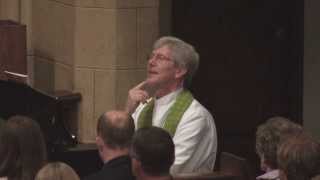
an experimental sermon...
Sunday, August 4, 2013
My Visit to Good Shepherd
What fun for me
to get to visit a church, and nobody knows I’m there. This morning I popped in to the 10:00 service
at Good Shepherd – United Methodist just like Myers Park where I usually find
myself up front on Sundays, but pretty different. Here’s a photo I took from the back (where I
sat) next to one from the back of Myers Park.
 Facing a free
Sunday morning, I’d chosen Good Shepherd largely because the pastor, Talbot
Davis, is a good friend – and he visited my place back on Nov. 11, and wrote a great blog
reflecting on his experience. Here’s
mine – on visiting Good Shepherd.
Facing a free
Sunday morning, I’d chosen Good Shepherd largely because the pastor, Talbot
Davis, is a good friend – and he visited my place back on Nov. 11, and wrote a great blog
reflecting on his experience. Here’s
mine – on visiting Good Shepherd.
 My friend Talbot
handled the major welcome – and announced a major staff change right on the
spot! Very engaging, enthusiastic,
speaking of God’s role in the decision, with lots of “your board,” “we,” group
language… and then he prayed over it.
Lovely. No robe, no tie; not 1 person in the place wore a tie! Felt like he was up close, even in the huge auditorium.
My friend Talbot
handled the major welcome – and announced a major staff change right on the
spot! Very engaging, enthusiastic,
speaking of God’s role in the decision, with lots of “your board,” “we,” group
language… and then he prayed over it.
Lovely. No robe, no tie; not 1 person in the place wore a tie! Felt like he was up close, even in the huge auditorium.
 Facing a free
Sunday morning, I’d chosen Good Shepherd largely because the pastor, Talbot
Davis, is a good friend – and he visited my place back on Nov. 11, and wrote a great blog
reflecting on his experience. Here’s
mine – on visiting Good Shepherd.
Facing a free
Sunday morning, I’d chosen Good Shepherd largely because the pastor, Talbot
Davis, is a good friend – and he visited my place back on Nov. 11, and wrote a great blog
reflecting on his experience. Here’s
mine – on visiting Good Shepherd.
Driving past
Carowinds’s Intimidator whirling up high, I was tempted to stop and ride – but drove
on to the church’s parking lot, which featured marvelous signage, beginning at
the street and on into the lot, welcoming me.
One sign was intended for me: “First-time
visitor parking.” Great idea, but I
found a shady spot instead.
Entering the
place was intriguing. Wearing khaki
slacks and a short sleeve dress shirt, I felt a little bit overdressed. A teenager at the door handed me a
nametag. I asked her if I should put my
name on it, and she laughed and said, “Yeah, that’s kind of the idea.” I stood at an information desk, where the
people behind it were chatting with one another. I interrupted and asked what they had. The woman claimed “Oh, all kinds of things,
including cds and dvds.” I told her I
would check out the quality of the preaching and then decide whether to get a
dvd. She said “I promise you,
unequivocally, that the preacher is the best you’ve ever heard in your life.” Hmm…
I found a seat,
and even though at least one-fourth of those attending wandered in late, I was
impressed that the place was packed – on August 4. Excellence, attention to detail - lots of kinds of people.
 I sat down and pondered the bulletin,
which was very cool and captivating - but it made me grow uneasy, as it didn’t tell me what was going to happen or when. Two cards were stuffed inside inviting me to something or another; well-done, they made me want to come.
One guy (named David) came up, shook my hand in with immense warmth, and welcomed me. I was again impressed – but then when the music started I noticed he was a guitarist on stage. An official greeter. No unofficial person spoke – but I know this is normal in big church life.
 There was an information sheet in the bulletin, which I filled out, but couldn't figure out what to do with it - so now it is on the seat of my car. It asked amazing things - like my birthday, and the birthdays of my children. Will I get a card? We pass an attendance pad at my place - which I see is probably outmoded and not as helpful as this card. I should have listed a prayer request.

which was very cool and captivating - but it made me grow uneasy, as it didn’t tell me what was going to happen or when. Two cards were stuffed inside inviting me to something or another; well-done, they made me want to come.
One guy (named David) came up, shook my hand in with immense warmth, and welcomed me. I was again impressed – but then when the music started I noticed he was a guitarist on stage. An official greeter. No unofficial person spoke – but I know this is normal in big church life.

The music then
started. Very professional, warm – but I
didn’t know any of the songs, and there was no music to help me know to go up
or down. The music was catchy, but the
words were all about “me,” “I,” no “we” or “the church.” God was a “he”; it would be hard to get away
with that where I work. And we stood for
quite a long time – which was difficult for somebody like me with a bad
back. And it was dark… The lights did come up (thankfully) when the
sermon began.
During this
extended singing, I counted about 50 people around me I could see well. About one-third were singing, about one-third
were maybe singing a little bit now and then, and another third didn’t sing one
note. But the music from the front was
loud, so it didn’t feel like there was a lack of singing. Almost every person, even those not singing,
was bobbing up and down, and seemed to be digging the experience. I think I bobbed a little. At Myers Park, nobody bobs – but we really do
need just about all of them to sing for the sound to be full. My folks actually sing really well.
At sermon time, Talbot walked on stage to
sound effects, like a storm at sea (which was his topic). I’d studied ahead and knew he’d be preaching
on that kooky text in Genesis where Noah gets drunk and naked, only to be
covered up by his sons. He prayed,
saying “God, I can’t do this without you” – and then talked. Very warm, clear, loads of charisma, a genuine
feel, and wicked funny. Hilarious intro
stuff, and then, 7 minutes in, he made his first memorable point: we are vulnerable after a success. Well-played.
Talbot debunked
crass misreadings of Genesis 9 (pointing out quite humorously that Noah’s curse
was in fact made when he was drunk and naked…), and focused on the idea of the
messes we make, and who cleans them up.
He spoke of edgy things that might make my folks shiver: incest, drunkenness, nakedness, taking
advantage of someone drunk.
The sermon lasted
precisely 31 minutes. That’s 2 sermons
for me at Myers Park! Talbot is a
terrific preacher, very real-life, personal without getting maudlin. I wanted him to work on Jesus and grace a
little more… We pastors always rewrite
other’s sermons while we’re semi-listening to them, and I thought about the
sons covering Noah’s mess, and thought if I were preaching this I’d pick up on
the image of the "covering" of mercy and grace, and healing power of that
covering mercy. But then the sermon
would have stretched to 41 minutes…
And then it all
ended, sort of "Okay, we're done now" – and they hadn’t taken up an offering.
I was planning to drop a check for $15,000 in the plate… so they missed
that opportunity. I wonder how they
raise money. As I exited, I noticed the
folks were friendly with one another, although nobody spoke to me, which was
fine. Talbot seemed – happy? – to see
me; we clergy never expect to see one another on Sunday morning! And another young person handed me a little piece
of paper I could use to find an online ebook.
Back to the parking lot where I was even happier not to be in visitor
parking, as I was still in the shade!
And then I drove home, grateful for the chance to be in a place with décor and music and dress and the whole experience so different from my home church, and yet both certainly United Methodist, both very devoted to the living God, who makes all of us unidentical children into holy sons and daughters in God’s family.
And then I drove home, grateful for the chance to be in a place with décor and music and dress and the whole experience so different from my home church, and yet both certainly United Methodist, both very devoted to the living God, who makes all of us unidentical children into holy sons and daughters in God’s family.
Subscribe to:
Posts (Atom)
.jpg)